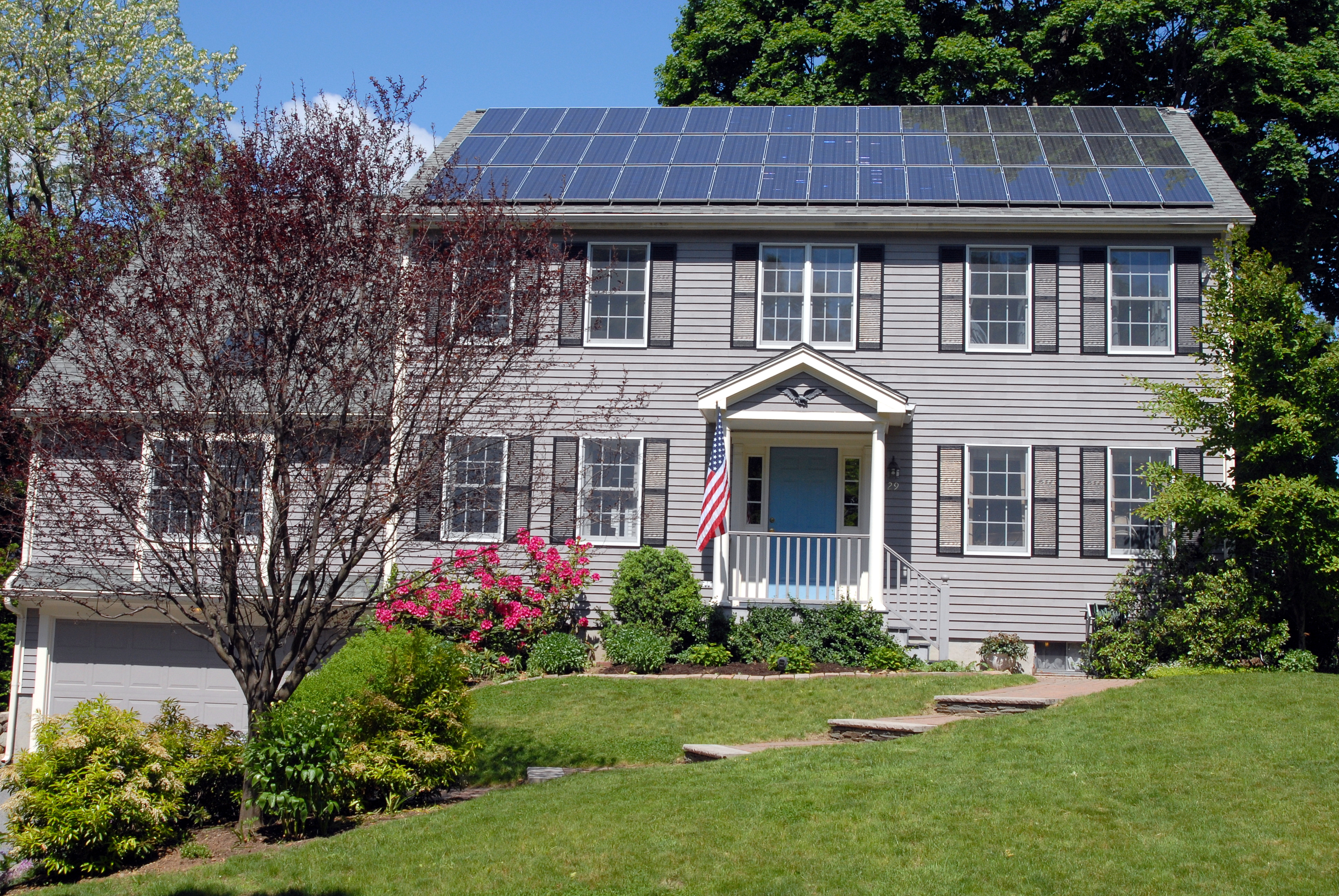
Passive solar design describes a set of architectural decisions that allow a building to collect, store, and distribute solar heat in winter while minimizing unwanted heat gain in summer — without the need for active mechanical systems doing that work. In Canadian climates, where heating accounts for the largest share of residential energy consumption, these principles have measurable financial and comfort implications that go well beyond aesthetic preference.
The approach is not new. Before central heating became standard, builders in northern latitudes naturally oriented structures to capture winter sun. What has changed is the precision with which that instinct can now be quantified. The Passive House Planning Package (PHPP), developed by the Passive House Institute (PHI) in Germany, allows designers to model heating demand at a resolution fine enough to specify insulation thicknesses and glazing areas to within a few percentage points of a performance target.
Solar orientation in Canadian contexts
The fundamental rule of passive solar design is straightforward: the long axis of the building should run roughly east-west, with the primary glazing facing south (true south, not magnetic south). In Canada, declination corrections range from around 15° west in Atlantic Canada to over 20° east in British Columbia, which affects how “due south” aligns with the compass reading on-site.
A deviation of up to 30° from true south on the primary glazing reduces solar gain collection by roughly 10–15% in midwinter, which in many cases is acceptable depending on how the rest of the envelope performs. Beyond 45°, the passive solar benefit drops enough that other design strategies need to compensate.
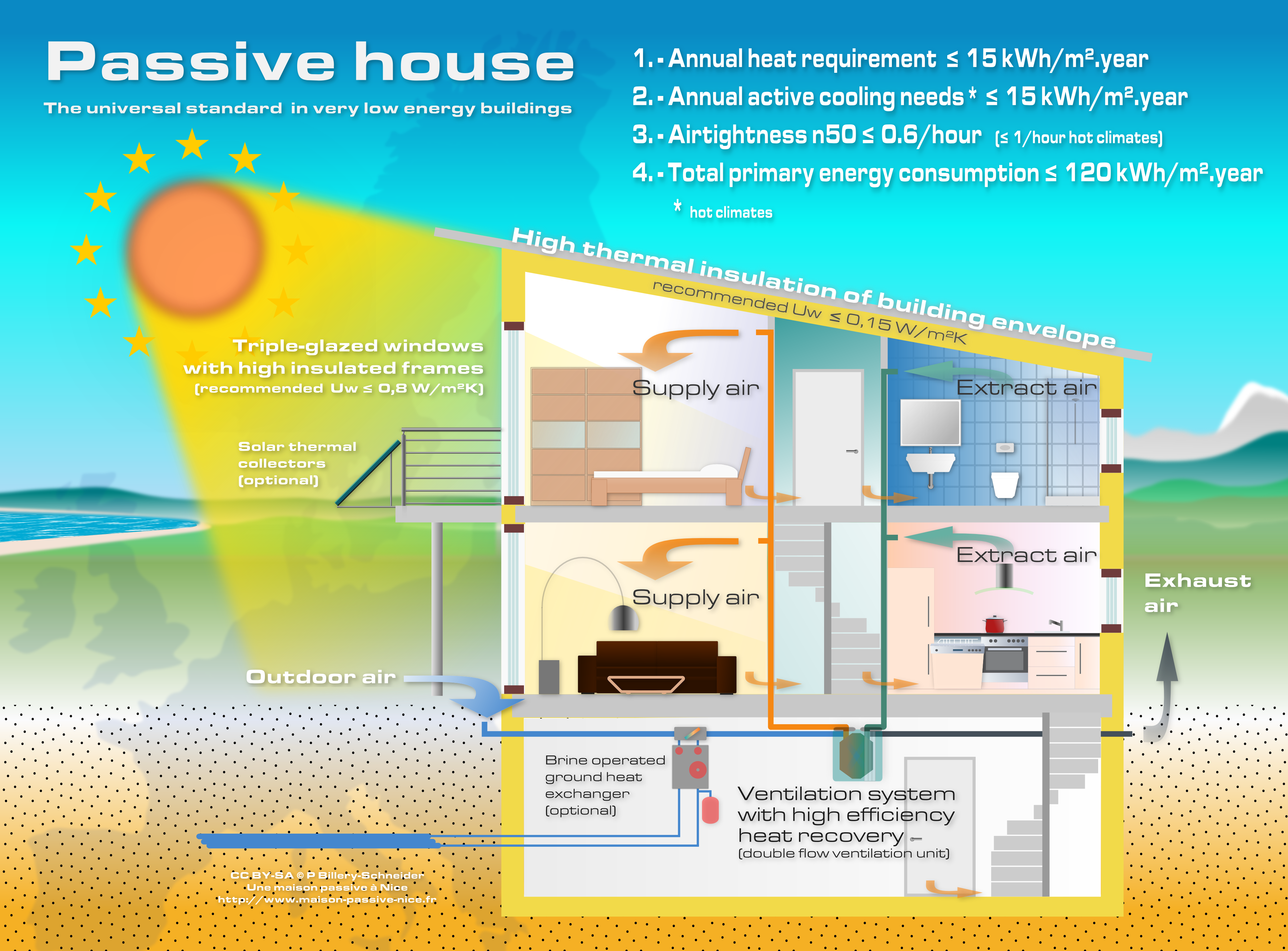
Canadian lot geometries, particularly in urban subdivisions, don't always permit ideal orientation. In those cases, passive solar design becomes a question of optimization rather than perfection: maximizing south-facing glass within the available orientation, improving the envelope in other dimensions, and accepting modest reductions in solar contribution.
Thermal mass: what it is and how much is needed
Thermal mass refers to materials with a high capacity to absorb and release heat slowly. In a passive solar home, exposed mass — typically concrete floors, brick walls, or stone — inside the building envelope absorbs solar energy during daytime hours and releases it gradually as indoor temperature drops in the evening and overnight.
The Canadian climate creates specific sizing considerations. A home in Kelowna, B.C., with around 2,900 heating degree days (base 18°C), needs a meaningfully different thermal mass ratio than one in Winnipeg with over 5,700. In colder climates, the window for useful solar gain is compressed and nights are longer, which means mass must be sized appropriately to prevent the building from overheating on sunny January days while still providing heat through a 16-hour winter night.
A common reference point from the PHI and Natural Resources Canada research suggests a thermal mass-to-glazing ratio of approximately 5:1 to 8:1 by area as a reasonable starting range for cold-climate passive solar design. A home with 12 m² of south-facing glass would target 60–96 m² of exposed mass surface, though the depth of that mass (minimum 100 mm for concrete or masonry) is as important as surface area.
Materials commonly used for thermal mass in Canada
- Polished or exposed concrete slabs — the most common choice in new construction, with a thermal mass value of approximately 2,060 kJ/m³·K. Requires careful insulation placement below the slab to prevent heat loss to the ground.
- Brick or stone veneer walls — effective when left uninsulated on the interior face and exposed to direct solar gain.
- Tile over concrete — widely used in slab-on-grade homes; tile adds negligible thermal resistance while keeping the mass surface accessible to solar gain.
- Phase change materials (PCMs) — less common but increasingly used in retrofits where structural mass cannot be added. PCMs embedded in drywall panels provide storage equivalent to a much thicker mass wall for the same weight.
Glazing ratios and window specifications
Canadian window performance requirements have tightened significantly under provincial code updates aligned with the National Energy Code for Buildings (NECB) and the tiered framework introduced in the 2020 National Building Code. In climate zones 6 through 8 (covering most of Alberta, Saskatchewan, Manitoba, and northern Ontario), triple-pane windows with low-emissivity coatings and insulated frames are now the practical baseline for passive solar applications.
For south-facing glazing, solar heat gain coefficient (SHGC) is a critical parameter often overlooked in standard residential window selection. A high SHGC (0.4–0.6) maximizes winter solar collection. However, the same windows that perform well in January require a carefully designed overhang to prevent overheating in summer, when the sun is higher and cooling loads rise.
The correct overhang depth for a given latitude and window height can be calculated from sun angle data available through the Natural Resources Canada RETScreen suite. In Ottawa (latitude 45.4°N), an overhang that fully shades a south-facing window at the summer solstice noon sun angle of approximately 68° above the horizon requires a projection of roughly 45% of the window height.
North-facing windows contribute essentially no solar gain and represent a consistent heat loss surface through winter nights. Most Canadian passive solar designs minimize north glazing to the minimum required for ventilation and daylighting on that facade — typically 2–4% of floor area rather than the 10–15% common on south facades.
Airtightness targets and ventilation
Passive solar performance is undermined by air leakage more than almost any other single factor. A building envelope with good insulation but poor airtightness loses heat faster through infiltration than through conduction. The Canadian EnerGuide rating system uses a blower door test result expressed in air changes per hour at 50 pascals (ACH50) as the airtightness metric.
For certified Passive House buildings, the PHI requires ACH50 ≤ 0.6. For comparison, a standard Canadian new construction home built to minimum code typically tests at 3.0–5.0 ACH50, and older housing stock frequently exceeds 10 ACH50. The difference in annual heating load between a 0.6 and a 3.0 ACH50 building in Climate Zone 7 is substantial — modelling by Canada Mortgage and Housing Corporation (CMHC) suggests it can account for 20–35% of total annual heating energy in northern climates.
A tight building requires a mechanical ventilation system, typically a heat recovery ventilator (HRV) or energy recovery ventilator (ERV). In very cold climates, HRVs with efficiencies above 80% and frost protection controls are standard practice. Without controlled ventilation, a tight passive solar house will accumulate moisture and CO⊂2; to unacceptable levels regardless of how well the thermal envelope performs.
Provincial code alignment and certification pathways
British Columbia has adopted a stepped code approach aligned with passive house performance levels at its highest tiers. The BC Energy Step Code's Step 5 requires near-passive-house performance and has been adopted by a growing number of municipalities, including Vancouver and the City of Victoria.
Ontario's Building Code does not yet mandate passive house performance thresholds, but the 2017 supplementary standard SB-12 was updated in 2022 to tighten prescriptive insulation and airtightness requirements across climate zones. Energy performance compliance path modelling using HOT2000 software is increasingly used by builders targeting enhanced performance beyond minimum code.
For those seeking formal certification rather than just code compliance, PHI offers two tiers: the classic Passive House (PHI Classic) and Passive House Plus and Premium, which add requirements for renewable energy generation. Canadian certifications remain concentrated in British Columbia and Ontario but are growing across Quebec and Alberta.
Common design mistakes in Canadian passive solar projects
- Misidentifying true south — failing to account for magnetic declination when siting glazing on-lot.
- Undersized thermal mass — adding south glass without adding proportional interior mass, resulting in afternoon temperature spikes and cold nights.
- High SHGC on all facades — specifying the same window performance on east, west, and north as on the south facade, leading to summer overheating through east and west glass.
- Skipping the blower door test — designing for airtightness but not verifying it, leaving gaps at electrical penetrations, plumbing rough-ins, and framing joints that erode the thermal envelope.
- Insulation below a slab without a vapour barrier — moisture migrating up through improperly detailed slab assemblies degrades insulation performance and contributes to indoor air quality problems over time.
Passive solar design in Canada is not a niche interest confined to experimental builds. It represents a documented, measurable approach to reducing a home's dependence on fossil fuel heating — one that is increasingly incorporated into mainstream residential construction as building codes tighten and energy costs rise.