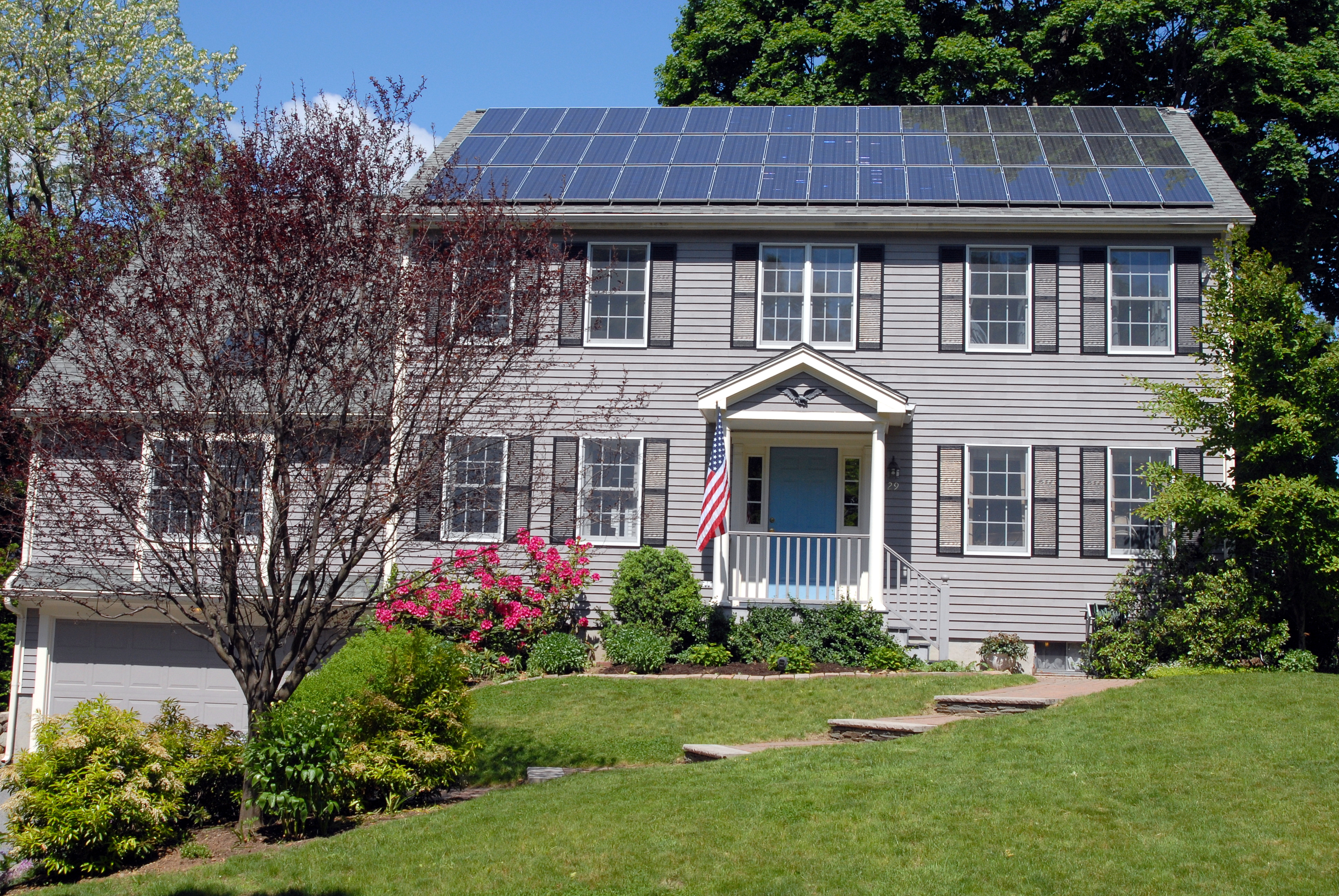
For a property beyond the utility grid in Canada, renewable energy is not a lifestyle statement — it is the only practical source of electricity for most applications. Canada has an estimated 300,000 to 600,000 off-grid dwellings, cabins, and remote work sites, ranging from seasonal hunting camps in northern Ontario to full-time year-round residences in rural British Columbia and Quebec. The energy systems serving those properties vary enormously in sophistication and cost, but the design principles follow a consistent logic that applies whether the system is 500 watts or 50 kilowatts.
This article focuses on photovoltaic (PV) solar as the primary generation source, battery storage as the primary buffering technology, and small wind turbines as a complementary generation source in sites with adequate wind resource. Diesel or propane generators are addressed briefly as backup, not primary, generation.
Canadian solar irradiance: the fundamental constraint
Solar panel output is primarily determined by the amount of solar radiation falling on the panel surface, measured in peak sun hours (PSH) — a unit equivalent to the number of hours per day during which irradiance averages 1,000 W/m². Canadian solar irradiance data is available from Natural Resources Canada through the RETScreen Clean Energy Management Software, which provides location-specific monthly average PSH data across the country.
The geographic variation is substantial and often counterintuitive. Some key reference points for annual average daily PSH (horizontal surface, adjusted for fixed south-facing tilt):
- Victoria, B.C.: approximately 3.9 PSH/day annual average (summer peak around 6.5, winter low around 1.4)
- Calgary, AB: approximately 4.5 PSH/day annual average (summer peak around 6.8, winter low around 1.9)
- Ottawa, ON: approximately 3.8 PSH/day annual average (summer peak around 5.9, winter low around 1.3)
- Whitehorse, YT: approximately 3.5 PSH/day annual average (summer peak around 6.2, winter low around 0.4)
The winter low in Whitehorse — 0.4 PSH/day in December — illustrates the core sizing challenge for northern off-grid systems. A system sized to meet winter demand from solar alone would be massively oversized for summer. In practice, off-grid systems in high-latitude Canadian locations are sized for reasonable performance across the year and supplemented by backup generation through the worst winter periods.
Sizing a photovoltaic array
The starting point for sizing any off-grid solar system is a realistic load analysis. This requires cataloguing every electrical load in the property, its wattage, and its hours of use per day. A thorough load analysis for a modest off-grid cabin might look like:
- Lighting (12 LED fixtures × 10W, 4h/day): 480 Wh/day
- Refrigerator (efficient 12V DC unit): 300–500 Wh/day
- Water pump (300W, 0.5h/day): 150 Wh/day
- Laptop and phone charging: 100 Wh/day
- Occasional power tools and misc: 200 Wh/day
- Total: approximately 1,200–1,400 Wh/day
The system's required solar array output is calculated by dividing daily load by peak sun hours, then applying a system efficiency factor (typically 0.75–0.85 for an AC-coupled system with inverter losses, wiring losses, and panel temperature derating).
For a 1,400 Wh/day load in Ottawa in the worst winter month (1.3 PSH), using a 0.80 efficiency factor: 1,400 / (1.3 × 0.80) = 1,346 watts of panel needed for winter design. In practice, many systems accept that winter output will fall short and design to a more moderate season, with backup generation covering the deficit.

Battery storage: sizing and chemistry
Battery storage bridges the gap between when solar panels generate power and when loads consume it. For off-grid systems, storage is typically sized to provide 2–5 days of autonomy — the number of consecutive overcast days the system can cover without generation.
For a 1,400 Wh/day load with 3 days of autonomy at 50% depth of discharge (DoD), the required nominal battery capacity is: (1,400 × 3) / 0.50 = 8,400 Wh (8.4 kWh) of battery capacity.
Lead-acid vs. lithium iron phosphate (LFP)
Off-grid battery systems in Canada are increasingly transitioning from flooded lead-acid (FLA) or absorbed glass mat (AGM) batteries to lithium iron phosphate (LFP) chemistry. The comparison is relevant to anyone making a purchase decision:
- Lead-acid (FLA/AGM): Lower upfront cost per kWh (approximately $150–$300 CAD/kWh). Proven technology. Requires regular maintenance (FLA) and performs poorly below −10°C without temperature management. Cycle life of 500–1,200 cycles at 50% DoD.
- Lithium iron phosphate (LFP): Higher upfront cost ($500–$900 CAD/kWh for quality cells with BMS). No maintenance. Operates usably down to about −20°C (charging in sub-zero temperatures requires battery heating). Cycle life of 3,000–6,000 cycles at 80% DoD. The effective cost per cycle over the system lifetime is generally lower than lead-acid for systems with regular daily cycling.
For year-round Canadian off-grid use, LFP batteries installed in a conditioned or insulated battery compartment are now the standard recommendation from most system designers. Lead-acid remains appropriate for seasonal or low-budget applications where upfront cost is the primary constraint.
Small wind turbines as a complement to solar
Wind and solar resources in Canada are often inversely correlated through the year: solar peaks in summer when wind is typically calmer, and wind tends to be stronger in winter and spring when solar irradiance is lowest. This complementarity makes hybrid solar-wind systems particularly well-suited to high-latitude off-grid applications.
Small wind turbines for residential off-grid use range from 400W micro-turbines suitable for minimal supplemental generation to 10 kW turbines appropriate for larger properties. The critical site assessment requirement is a minimum average annual wind speed of 4.5–5.0 m/s at hub height for a small turbine to produce meaningful output. Wind speed data by location is available through the Natural Resources Canada Wind Resource Atlas.
Hub height matters substantially. Wind speed typically increases with height above the ground surface, following a power law that varies with terrain roughness. A site showing 3.5 m/s at 10 m height may produce 5.0+ m/s at 30 m, crossing the threshold for practical small wind generation. Tower costs increase with height, but so does annual energy output.
Regulatory considerations for small wind in Canada
Small wind turbine installations in Canada require compliance with provincial and municipal zoning bylaws. Setback requirements, height restrictions, and noise limits vary significantly between rural and urban/suburban zones. Some provincial agricultural zoning classifications are more permissive of small wind than residential zoning categories, even on rural residential properties. Confirm requirements with the local planning authority before purchasing a turbine or tower.
Inverters and charge controllers
The charge controller manages the flow of current from the PV array to the battery bank, preventing overcharge. Modern systems use maximum power point tracking (MPPT) charge controllers, which extract 20–30% more energy from the same panels compared to older pulse-width modulation (PWM) controllers by constantly adjusting the operating voltage to the array's maximum power point. In cold Canadian conditions, MPPT controllers perform particularly well because cold temperatures increase panel open-circuit voltage, and MPPT handles this variation efficiently.
The inverter converts DC battery power to AC power for standard household loads. For off-grid systems, a pure sine wave inverter is strongly recommended over modified sine wave alternatives; modified sine wave inverters can damage some motor loads (refrigerators, well pumps) and are incompatible with certain electronics. Inverter sizing should reflect the peak surge load of the largest motor that may start simultaneously, not just the continuous load.
Backup generation integration
Most year-round off-grid systems in Canada include a propane or diesel generator for backup use during extended low-generation periods. Generator sizing should reflect the battery bank's charge acceptance rate, not the peak load of the property. Running an oversized generator at 20% load to meet a small load is inefficient and accelerates wear; generators are most efficient and last longest when operated at 60–80% of rated capacity.
Propane generators are preferred over diesel in cold climates because propane remains fluid at very low temperatures without additives, whereas diesel requires cold-weather formulations and gelling risk management below −15°C.
Permitting and grid interconnection notes
Off-grid systems are not connected to the utility grid and typically do not require utility interconnection agreements. However, larger installations may still require building permits and electrical inspections under provincial electrical safety codes. In Ontario, the Electrical Safety Authority (ESA) requires inspection of new off-grid electrical systems. In B.C., Technical Safety BC covers this role. Other provinces have equivalent bodies.
Grid-tied systems with battery backup — increasingly relevant as power reliability concerns grow in suburban areas — follow different rules and require utility approval for grid interconnection through programs managed by provincial utilities such as BC Hydro, Hydro One (Ontario), and Hydro-Québec.

